I have a confession.
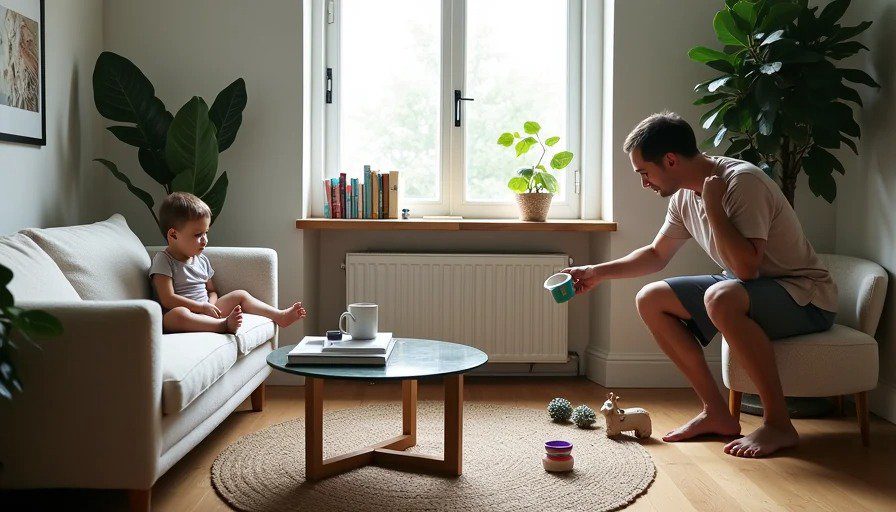
I spent six months of my first year of homeownership trying to make our living room look like a designer mood board. I saved photos. I bought "the right" pieces. I followed the color palette. I even bought a rug that looked perfect in the photo — and felt like sandpaper on my toddler's knees.
It never looked like the mood board. And worse: it wasn't comfortable.
So I gave up. I stopped copying. I started building a room that actually fits our life. And I've never been happier.
This is the question I keep coming back to: Would you rather copy a designer mood board badly, or build a simpler room that actually fits your life?
The case for copying (badly)
Why people try:
It's safe. A mood board is a recipe. You follow the instructions, you get something that looks cohesive. No design instincts required.
It's aspirational. That mood board represents a version of you that's more put-together, more stylish, more adult. You want to become that person.
It's easy to justify. "It's from this designer" or "It's the trending style" means you don't have to defend your choices.
It's visual. Pinterest, Instagram, Houzz — they feed you perfect rooms. It's hard not to want that.
Why it often fails (especially with kids):
The materials are wrong for real life. That bouclé sofa? Impossible to clean. Those open shelves? Dust magnets. That jute rug? Sandpaper for knees.
The scale is off. Designer mood boards often use oversized art, giant plants, and low sofas that look great in a 20‑foot room. In your 12×12 living room? It looks cramped.
You can't find the exact pieces. So you substitute. And then you substitute again. And suddenly your "Scandinavian minimalism" is a mashup of Target, IKEA, and Wayfair that doesn't quite cohere.
The room doesn't fit your life. That white sofa looks gorgeous on a mood board. But your toddler eats orange crackers. Your dog jumps up. You drink coffee on the couch at 6am. The white sofa becomes a source of anxiety, not joy.
"I tried to replicate a mid‑century modern living room from Apartment Therapy. I bought the sofa, the rug, the coffee table. It looked okay in photos. But my husband and I both work from home, and we have a toddler. There was nowhere to put toys, nowhere to sit with a laptop, no space for a high chair. We ended up selling half of it on Facebook Marketplace." — Lauren, mom of 1
The case for building for your life
What "building for your life" actually means:
You start with function: How do you actually use this room? Where do you sit? Where do you put your coffee? Where does your toddler play? Where do you charge your phone?
You choose durable materials: washable, wipeable, and designed to survive everyday chaos.
You accept imperfection: You buy that comfortable sofa that's not perfectly on‑trend. You hang that art your kid made. You have a toy bin in the corner.
You prioritize flow: Can you walk through the room without tripping? Can you see your toddler from the kitchen? Is there a place for everything?
Why this works (even if it doesn't photograph as well):
You actually use the room. Not just for Instagram, but for living. Reading, playing, napping, talking.
You stop cleaning as much. When you choose forgiving materials, you don't need to wipe everything down twice a day.
You feel less pressure. The room is yours. It doesn't have to meet anyone else's standards.
You spend less money. You're not chasing trends or buying pieces that don't fit. You buy what you need, once.
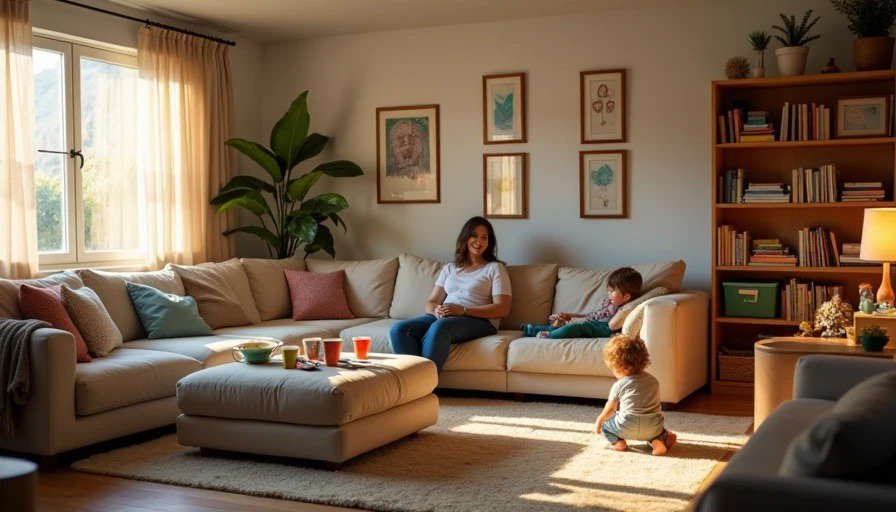
"We stopped trying to have a 'grown‑up' living room and just made it a family room. Big washable sectional. Padded ottoman instead of a coffee table. Bookshelves with toy bins. A wall of our daughter's artwork. It looks nothing like a mood board. But we spend every evening there, happy." — Mike, dad of 1
The reality check: what mood boards don't show you
Mood board reality | Real‑life reality |
|---|---|
One perfect sofa | One sofa that somehow collects 47 crumbs per hour |
A beautiful coffee table with styled books | A coffee table covered in sippy cups, remote controls, and your toddler's latest art project |
A giant floor plant | A giant floor plant that your toddler keeps pulling leaves off of |
Open shelves with curated ceramics | Open shelves with your oatmeal collection and a single mug you actually use |
A cozy throw blanket | A throw blanket that your child has dragged across the floor, into the kitchen, and back |
A neutral rug that ties the room together | A neutral rug that shows every single muddy footprint |
They don't show the chaos. They don't show the toys. They don't show the day‑to‑day.
And that's okay — mood boards are for inspiration, not instruction. But if you treat them as instruction, you'll be disappointed.
A better approach: mood board as inspiration, not blueprint
Instead of copying a mood board, try this:
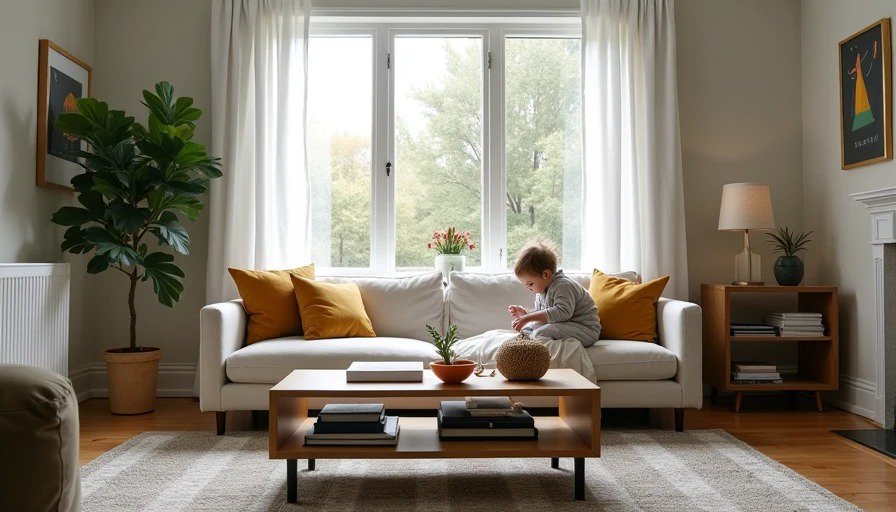
Save 10–20 rooms you love. Look for patterns: What colors keep showing up? What materials? What layouts?
Identify the feeling you want. Not the specific pieces. The feeling. Cozy? Light? Calm? Functional?
Look at your actual room. What's the light like? The size? The flow?
Buy pieces that serve your life first. Comfort, durability, function. Then layer in style.
Add a few "mood board" pieces that fit. A nice lamp. A piece of art. A throw pillow. Not the whole room.
This way, you get the feeling you want — without sacrificing your actual life.
The verdict: I'll take the simpler room
I've tried both. Copying a mood board made me anxious and broke. Building a room for my life made me calm and happy.
My favorite part of our living room now is a big, slightly messy bookshelf. It has our favorite books, our daughter's board books, a few plants that survived, and a basket of toys. It doesn't look like a magazine. But it holds our actual lives.
What about you? Would you rather copy a designer mood board badly, or build a simpler room that actually fits your life? I'm genuinely curious — and I think the answer might tell you more about your design philosophy than any mood board could.


No comments yet — be the first to share a thought.